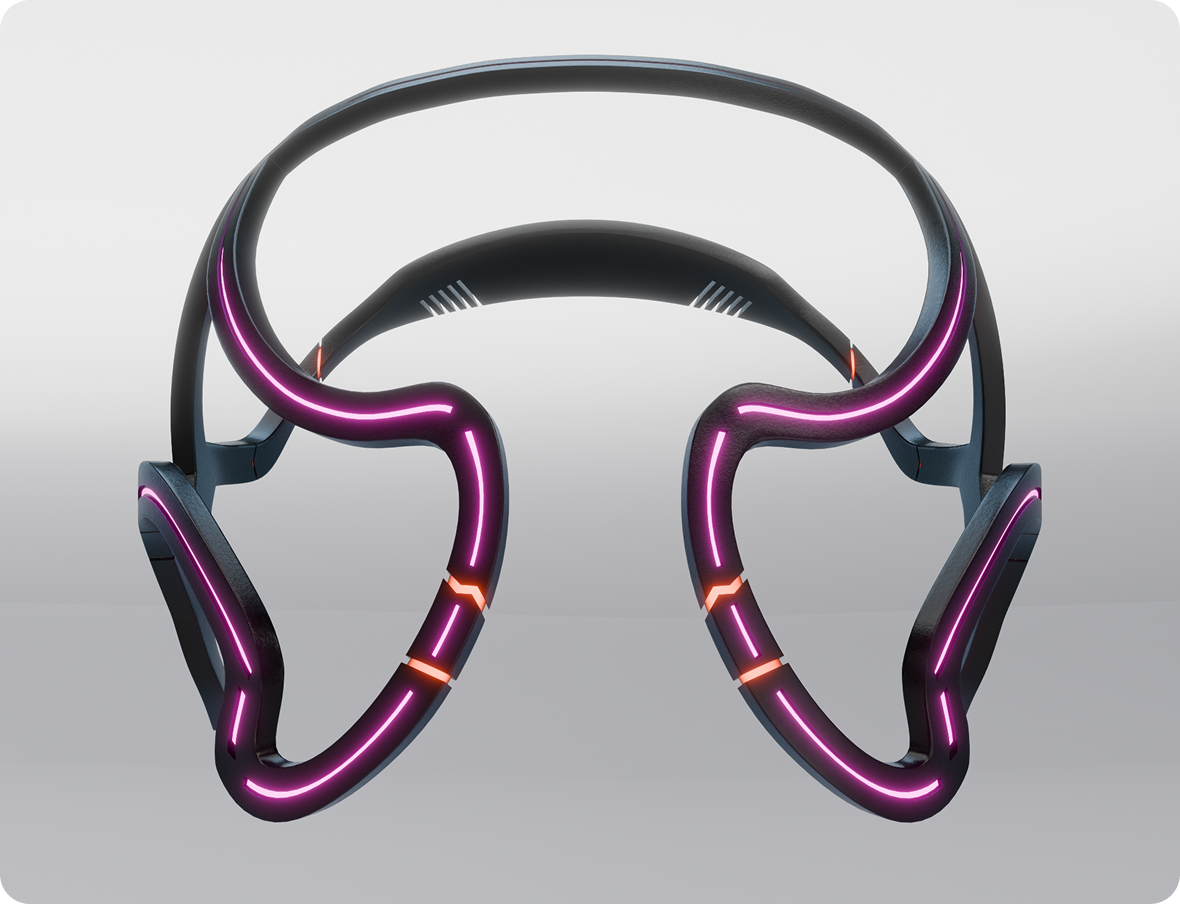

Oracle
2024
Speculative Design
Project Manager and Co-Team Lead
Product Definition • Storytelling & Narrative Building • Team Facilitation & Project Management • User Journeys & Concept Visualization•Presentation & Team Coordination •Product Ideation
Delivered a speculative concept through research, storytelling, and high-fidelity mockups.
Oracle
Project
Brief
Imagine a solution for the year 2071, a world recovering from ecological crises. Become familiar with the science that underpins the technologies of this era, and use it to envision new design opportunities for human survival, growth, and connection in a speculative future.
The
Problem
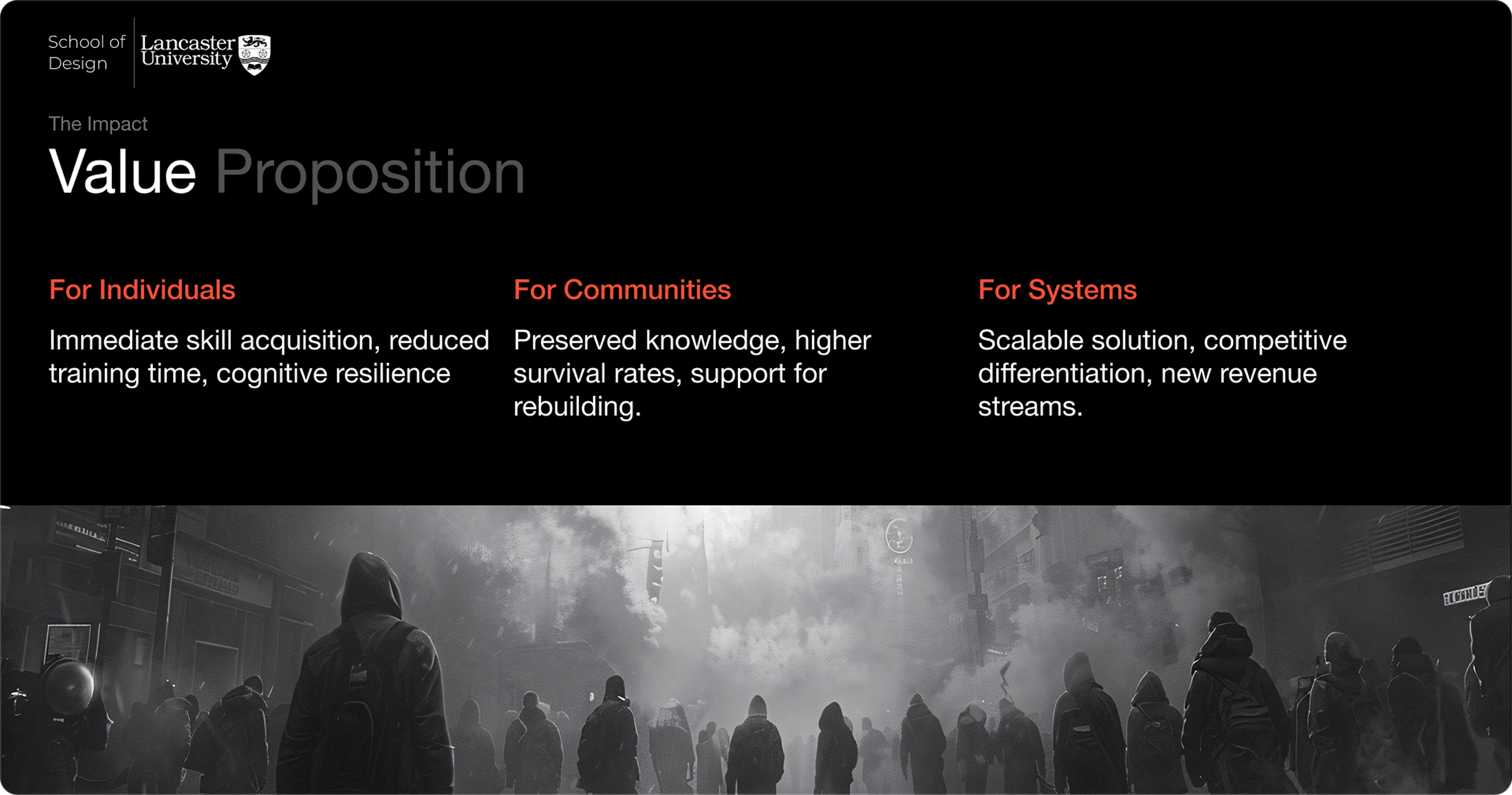
In our speculative world, survivors of ecological crises were rebuilding society but faced constant threats from instability and hostile actors. Communities needed tools to:
The Result
Genesis was a collaborative project, designed and delivered in a team of six. We shared responsibilities across research, design, and business strategy, but in this case study I focus on my role — shaping the product vision, narrative, and team alignment that helped bring Oracle to life.
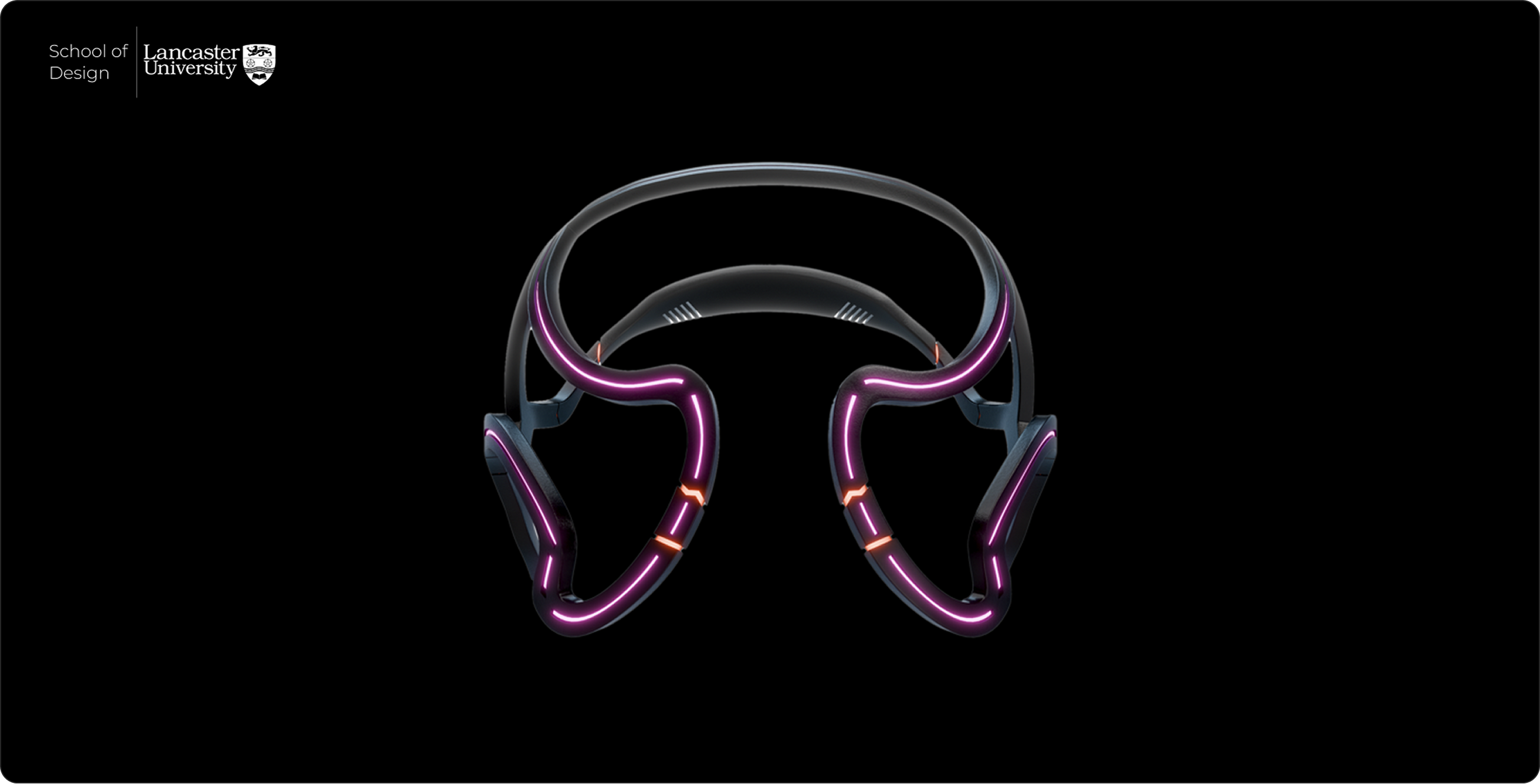
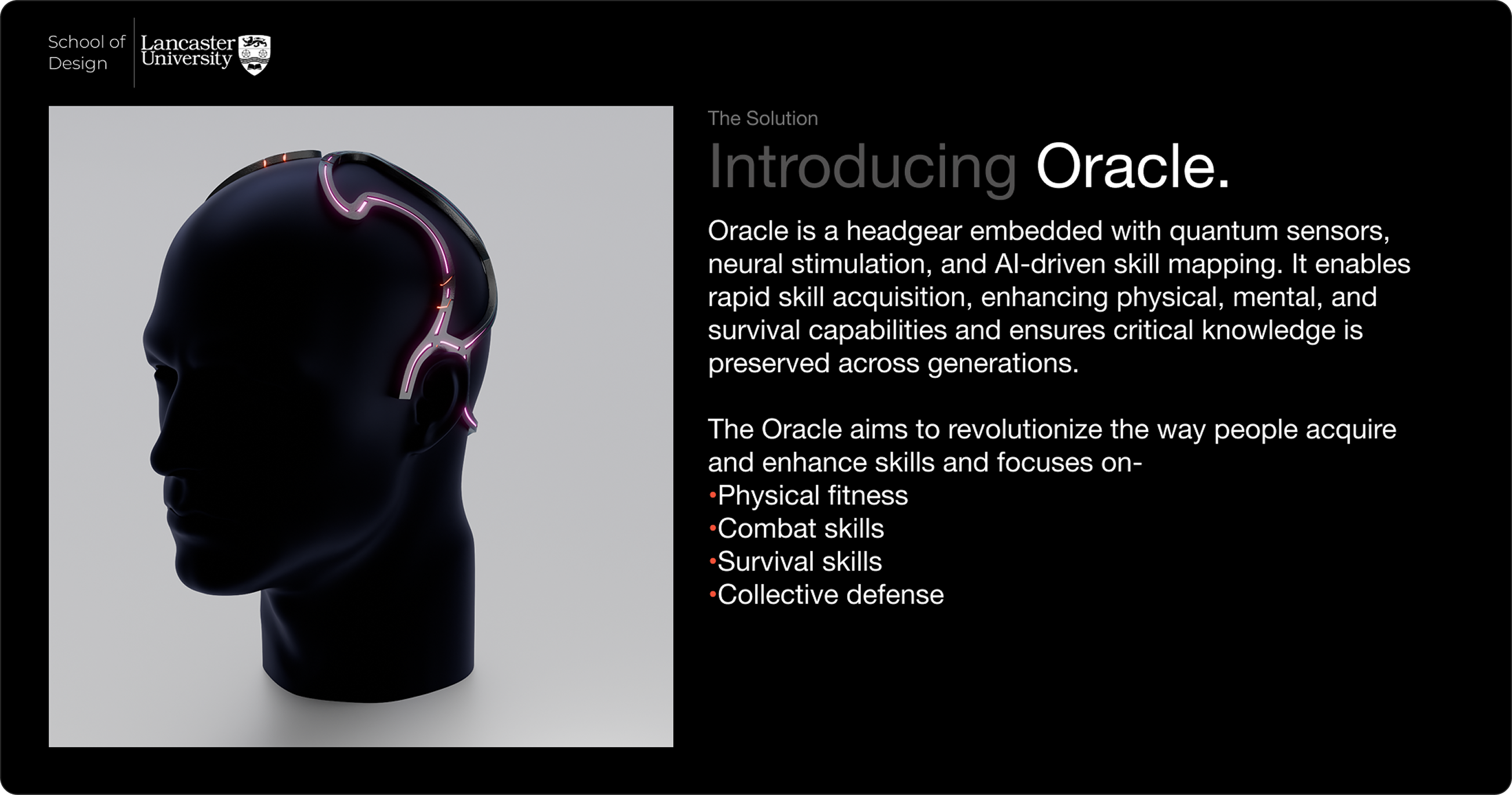
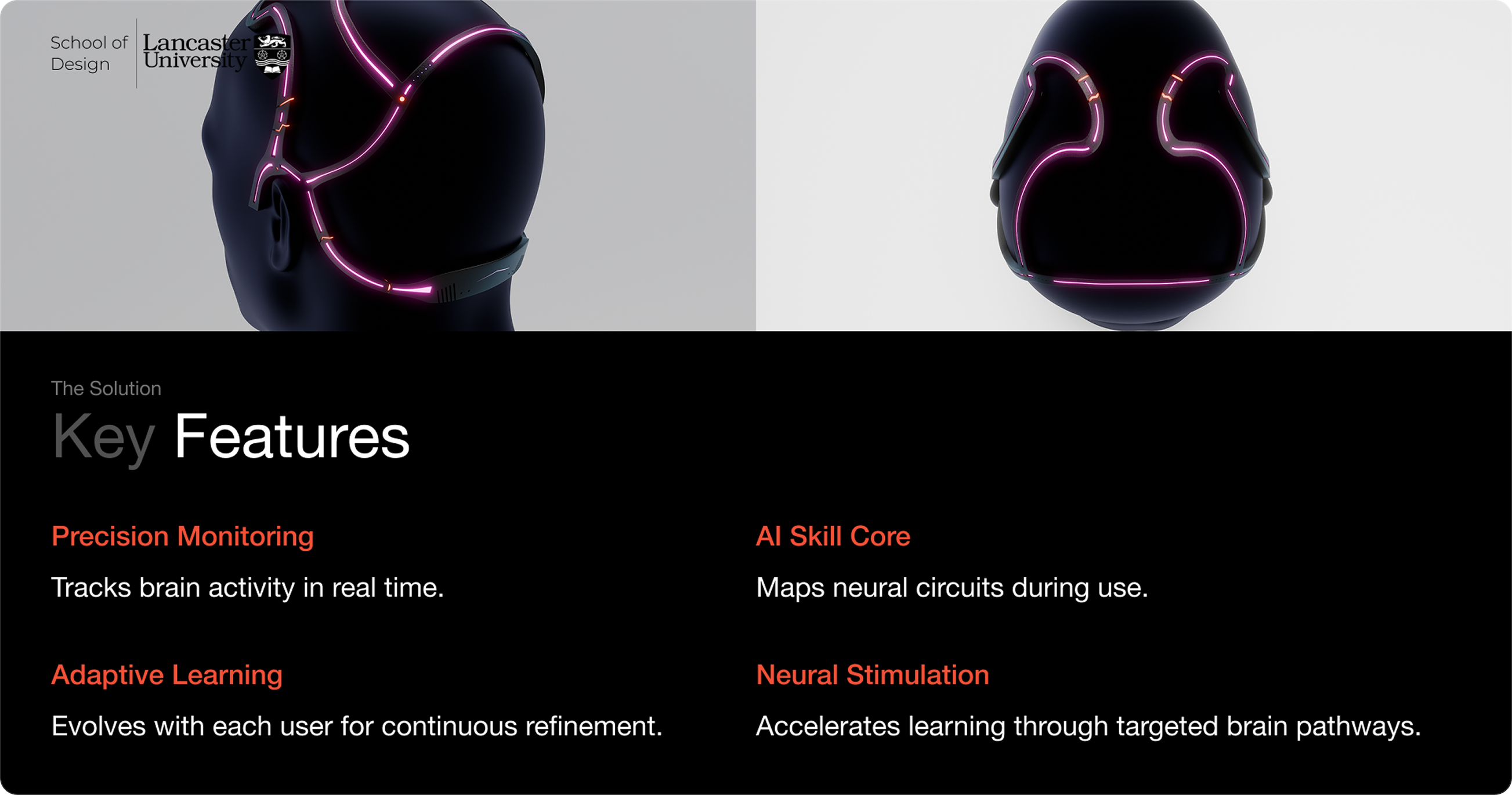
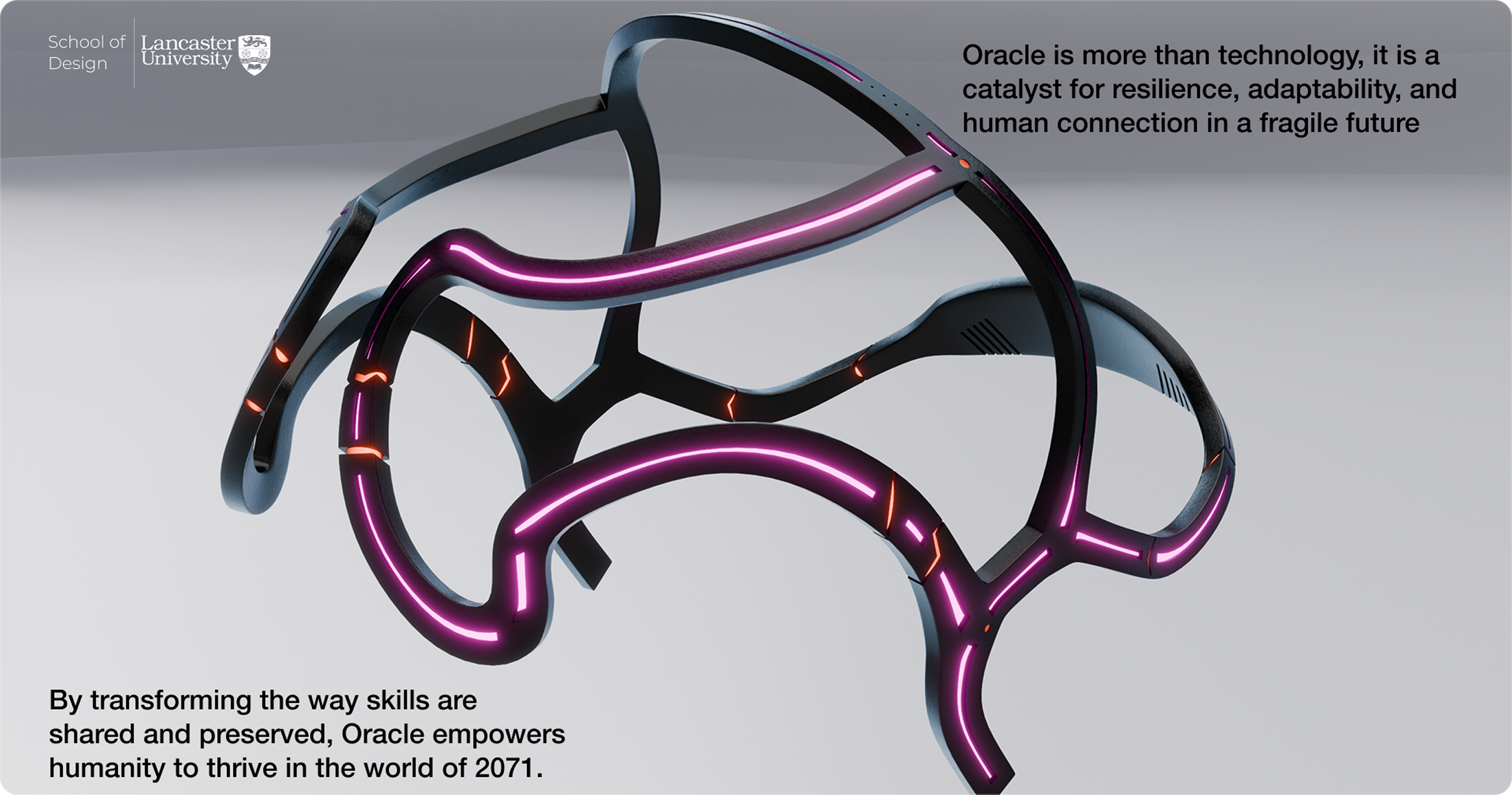
Together, we delivered a fully visualized speculative product — Oracle — supported by research, user journeys, and 3D mockups.
The
Process
The project was an iterative journey of brainstorming, researching, and grounding team mates in context before defining the product and visualizing it through sketches and concepts.My role centered on ensuring that insights and ideas converged into a coherent and compelling product vision in a week.
Discover
The process began with exploring the world we wanted to build — a post-ecological society in 2071. Research focused on how people might live and adapt after ecological collapse, and how established technologies such as quantum sensors, brain–computer interfaces, and AI could be extended realistically into this future. The emphasis was not only on the science behind these systems, but on how we might enable survival, adaptation, and human connection.
Ideate
With a product vision in place, attention turned to brainstorming features and applications. Multiple directions were explored: which skills Oracle should enhance, how it might serve individuals versus communities, and its role in scenarios like defense, survival, or training. Iteration was critical here, narrowing ideas into feasible, purposeful directions that aligned with both the world-building and user needs we had defined.
Define
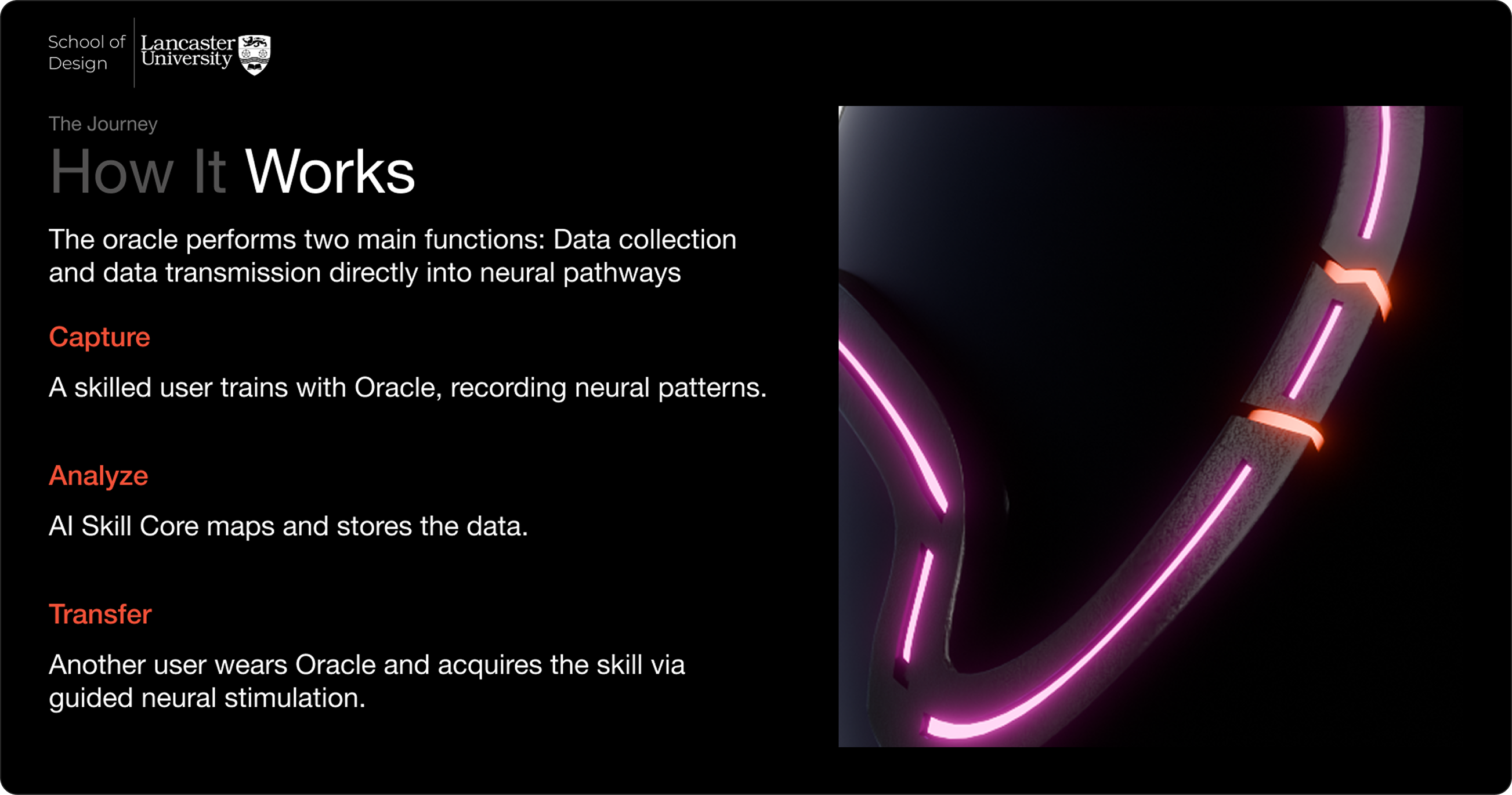
Insights from research were distilled into a clearer problem space: in a world defined by uncertainty, instability, and recovery, how could communities rapidly gain and share survival skills to remain resilient? Early concepts included brain implants, memory storage, and even transferring consciousness, but these remained too broad or abstract. Through iteration, the team refined the vision to something more human-centered and plausible: a wearable device capable of recording, analyzing, and transferring skills. This became the foundation of The Oracle.
Prototype
The concept was translated into tangible form through storyboards and user journeys. To make the idea feel credible, we collaborated with a 3D artist to visualize the physical product, ensuring the design reflected both advanced technology and practical usability. These visualizations made the speculative idea concrete, allowing us to present not just the object, but the user experiences as well.
Iteration & Refinement
Iteration was embedded throughout the process. At every stage the concept was reassessed to evaluate what was working, what needed refinement, and how well it aligned with the envisioned user experience. The final stage consolidated everything into polished deliverables and all earlier strands of work — insights, features, narratives, and visualizations — coalesced into The Oracle, a cohesive speculative product designed for the world of 2071.
Key Take-away
This project taught me how to effectively apply a strategic design process to solve advanced problems. It demonstrates my ability to collaborate and deliver under sprint conditions, aligning diverse perspectives into a cohesive vision.
View more projects