
Pay up
2021-2023
Fintech
Product and Design Strategy
3 Engineers, 2 Designers, 1 Business Developer, 1 Data Analyst
Pay Up
Pay Up is a digital payments platform that makes it simple to send, receive, save, and spend money — locally and internationally. It offers secure remittances, virtual dollar cards, and gift card purchases in one seamless experience.
My Role
I led product and design strategy, overseeing the overall product experience. As a Founding Designer, I led Pay Up’s overall product and brand experience, shaping design direction and ensuring a cohesive experience across app and social touch-points.
Pain Points
Goal
Responsibilities
As Pay Up’s founding designer, I led the product and brand experience — defining the design vision, leading research, designing user flows, aligning with engineers on implementation, and ensuring brand coherence across app and social channels.
Research & Discovery
Experience Design
Usability Testing
Design Strategy & Leadership
User Education
Brand Experience
Users
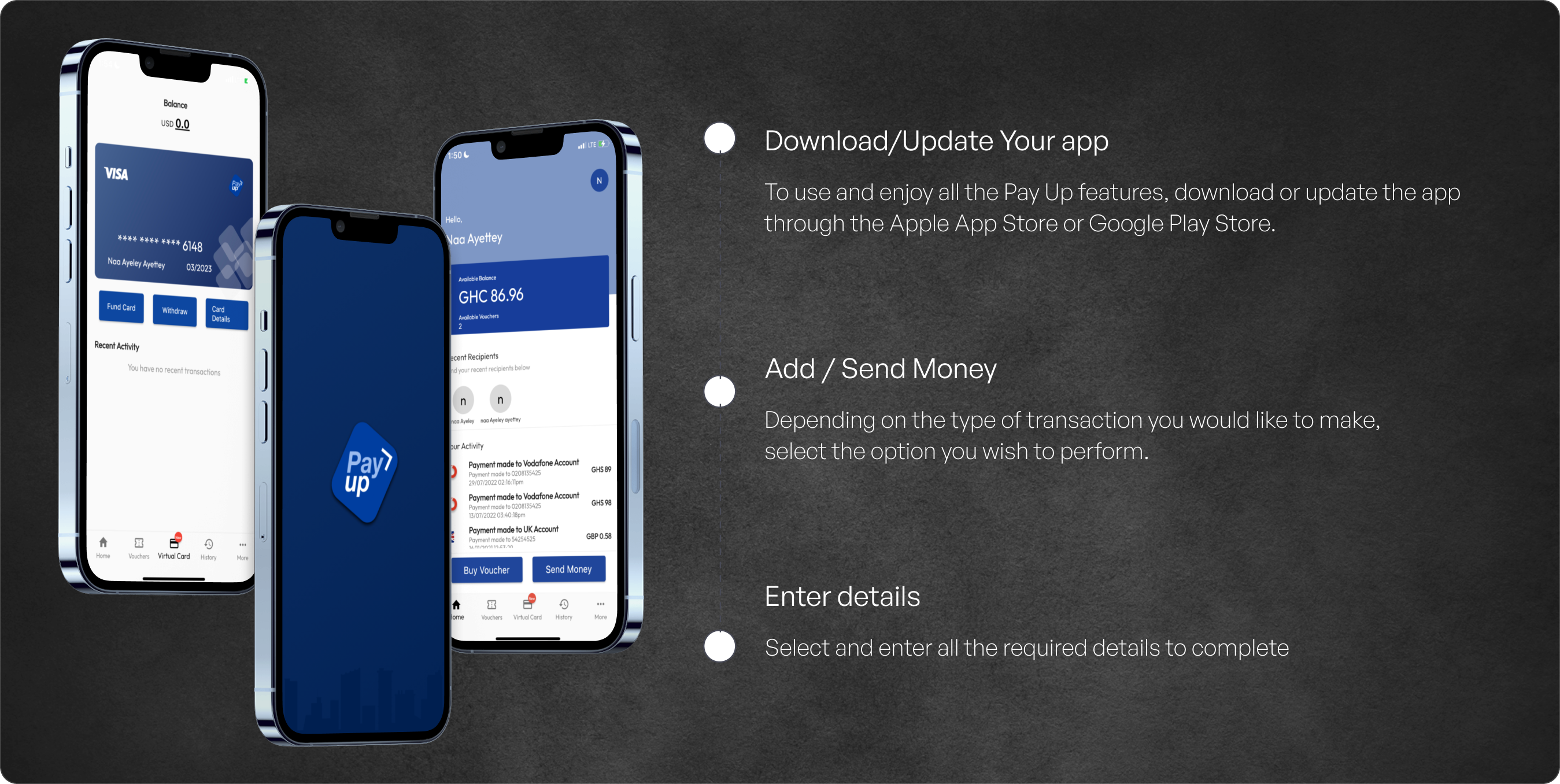
Pay Up serves Ghanaians living in the UK who frequently send money home or need a reliable tool to make international payments. Core users are young professionals and students seeking a fast, low-cost, and trustworthy alternative to traditional remittance services.

Josephine Asante
Age: 49
Location: Accra, Ghana
Occupation: Small Business Owner (Catering)
Profile
Josephine runs a catering business in Accra. Every month, she sends money to her daughter abroad to pay rent and living expenses. Traditional bank transfers often take 2–3 days to process, and she constantly worries whether the money will reach on time, especially for urgent payments.
Goals
Frustrations
Opportunities

Kwesi Addo
Age: 23
Location: Manchester, UK
Occupation: Postgraduate Student
Profile
Kwesi is studying in the UK and often relies on remittances from his parents for rent, tuition, and monthly expenses. He also struggles to make online purchases, Netflix, Adobe, and other subscriptions because his Ghana-issued Visa/Mastercard doesn’t work internationally.
Goals
Frustrations
Opportunities
The process
We adopted an agile, iterative approach that prioritised quick delivery and continuous improvement
Research
Continuously collected user feedback through social media, focus groups, surveys, and email conversations to identify challenges, gaps, and opportunities. We also tracked app usage and drop-off rates to understand where users struggled or disengaged.
Strategy
Synthesised insights with the team to prioritise key pain points, focusing on simplifying flows, improving communication, and enhancing trust through transparency.
Design
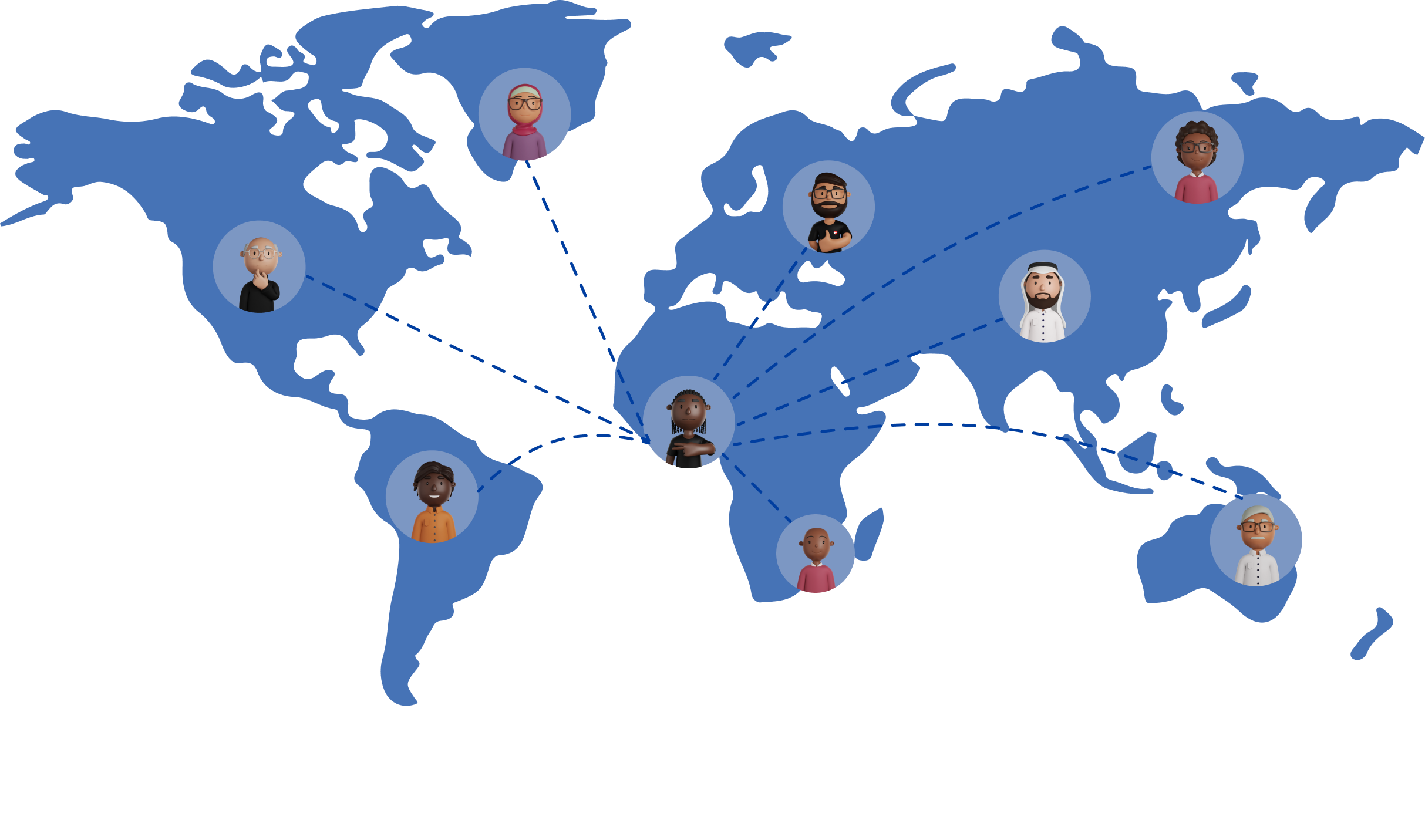
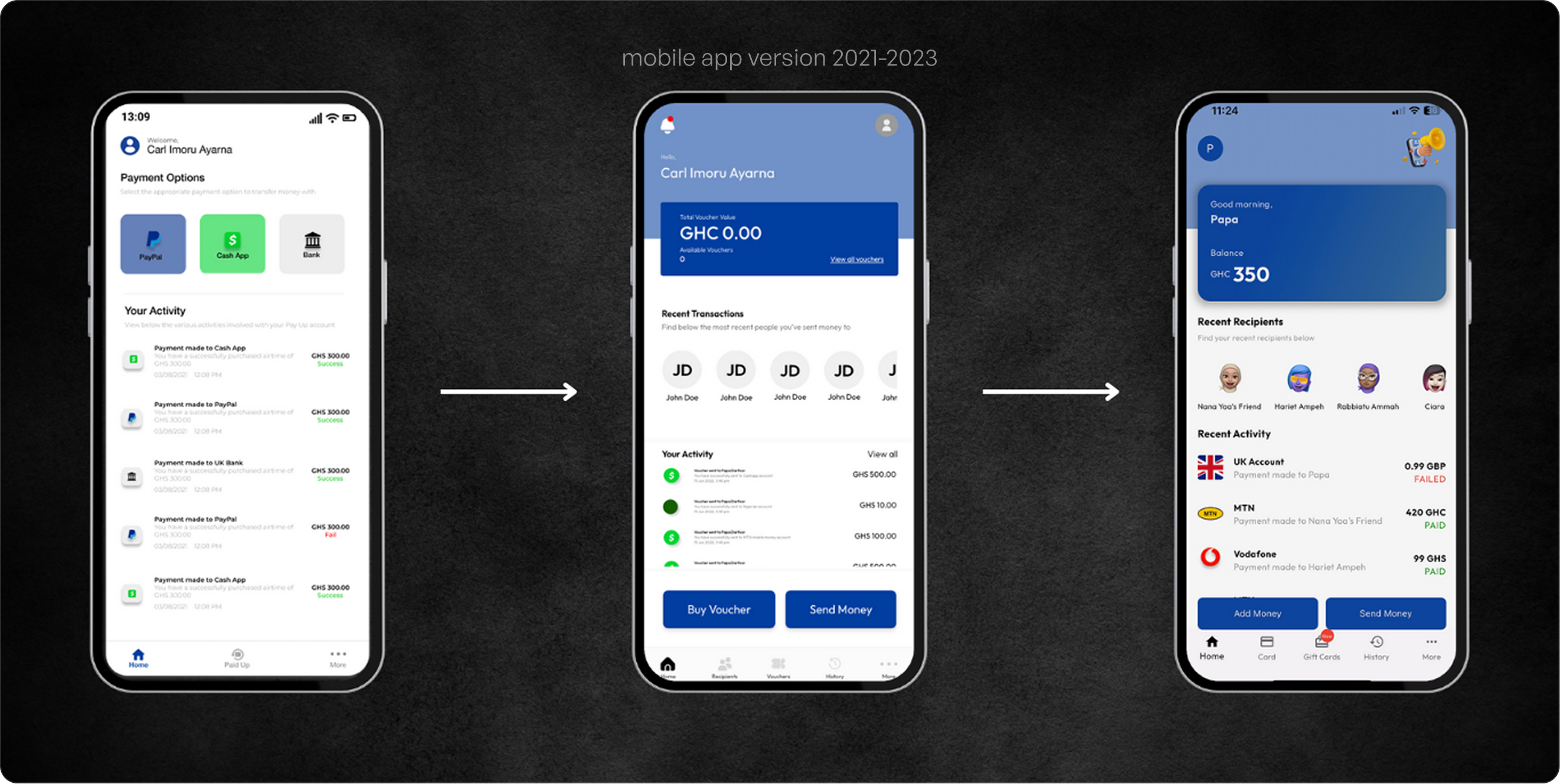
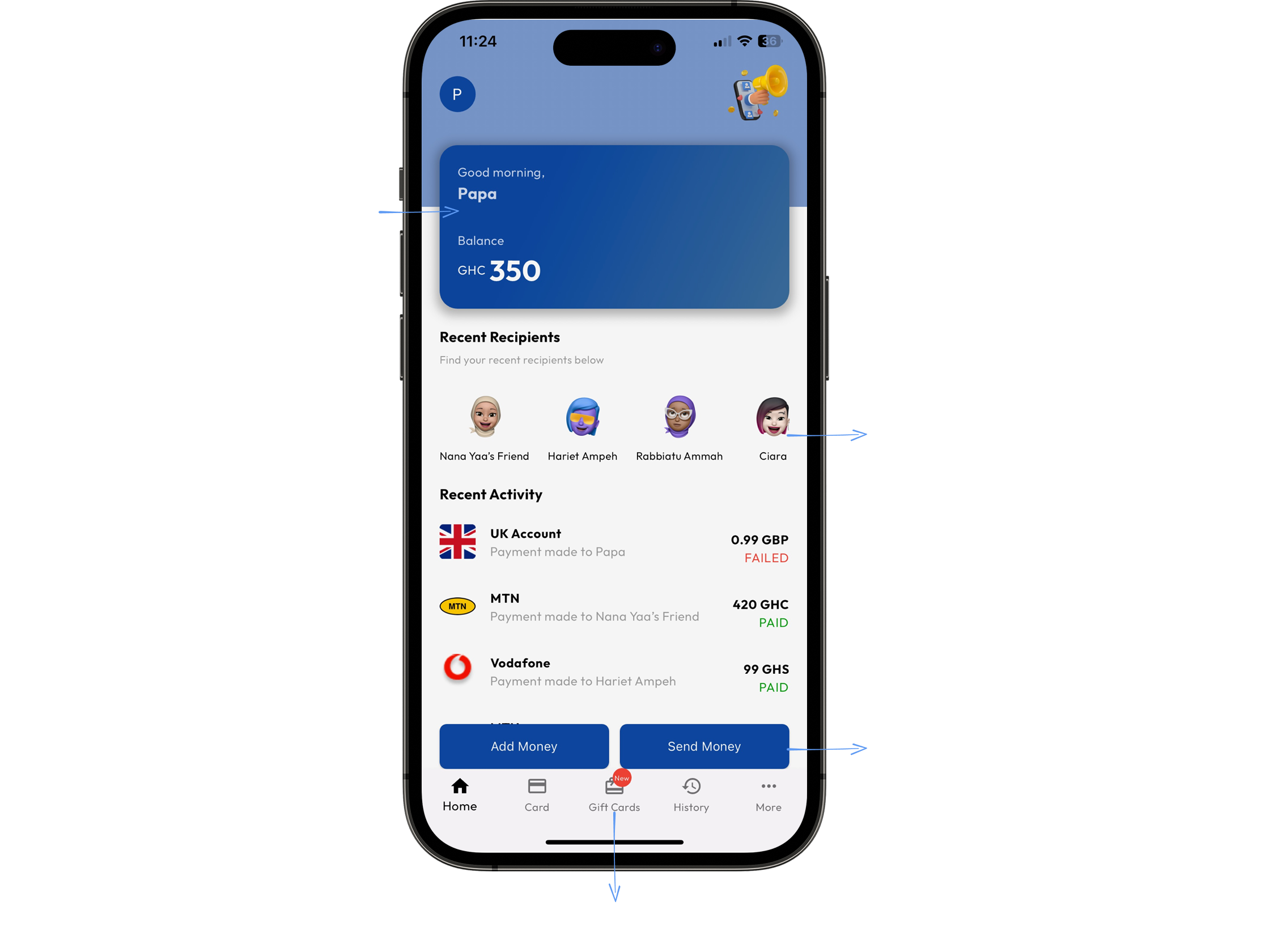
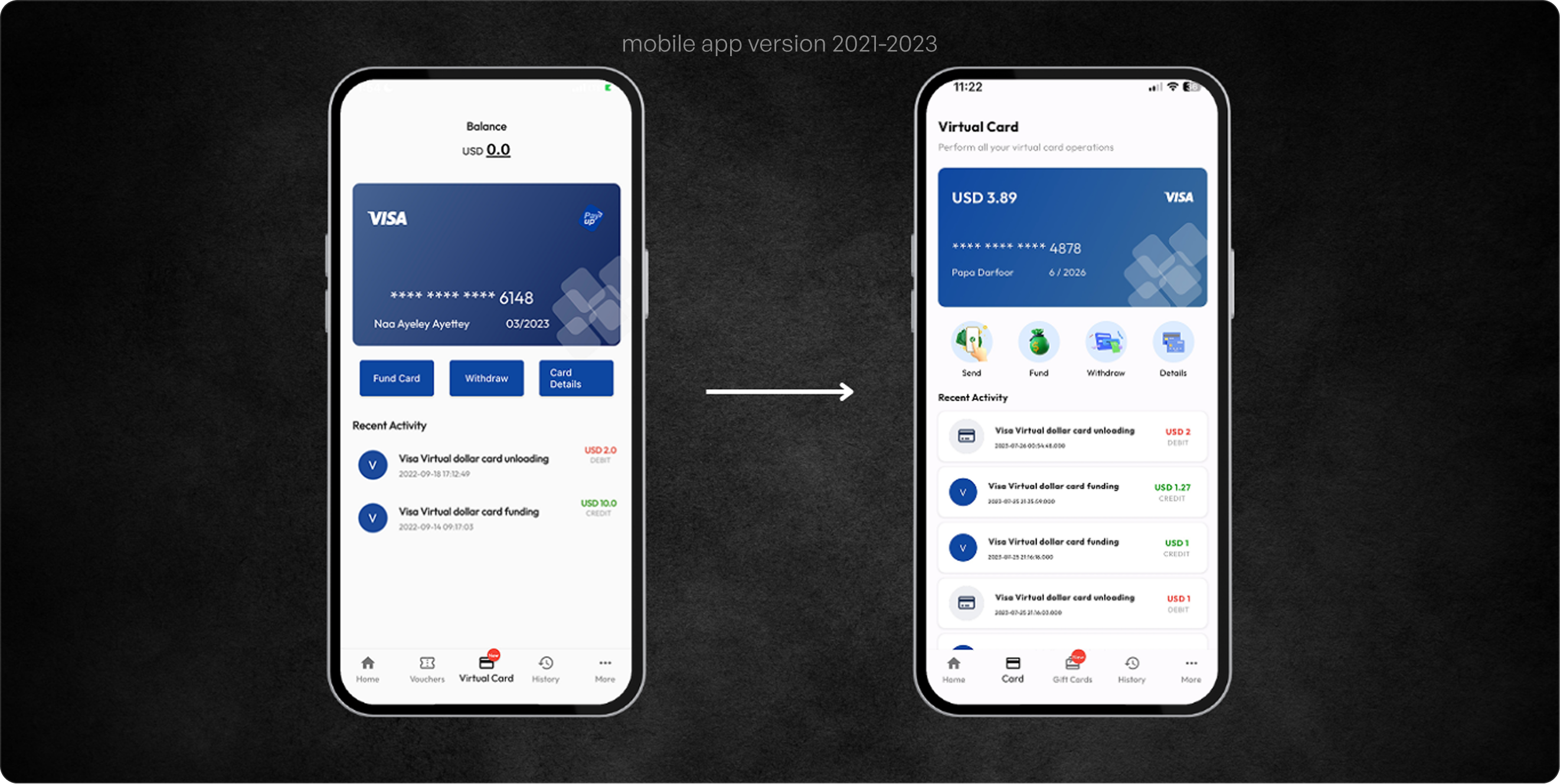
Created and approved new designs, ensuring they addressed user challenges while aligning with business goals. Simplified navigation for key actions (send, receive, withdraw) and ensured alignment with business rules
Develop
Served as the design owner throughout the build process, collaborating closely with engineering to validate design intent, user-centeredness and functional accuracy. Provided final approval on visual and interaction details.
Test & Iterate
Conducted usability testing sessions and monitored live performance data post-launch. Collected in-app feedback and social media responses to validate improvements and guide future iterations.
The Impact
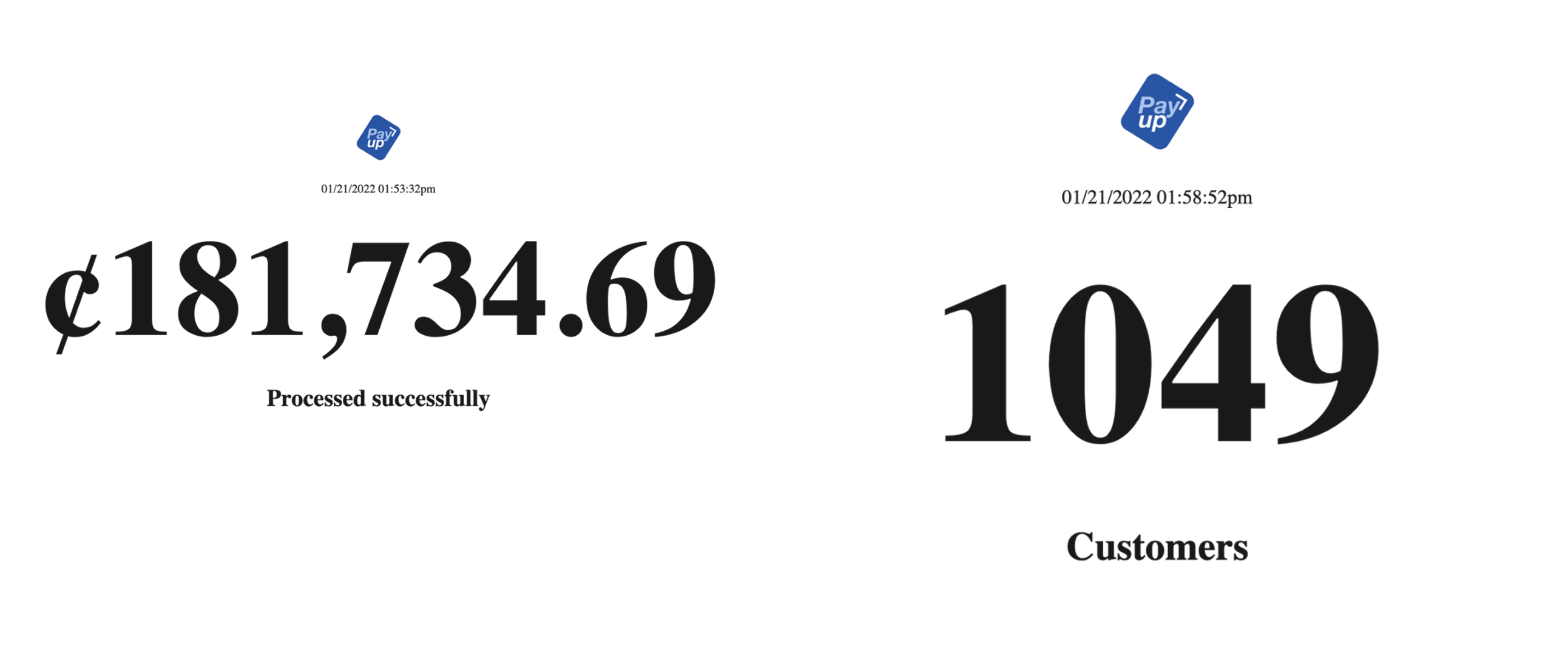
Product Experience
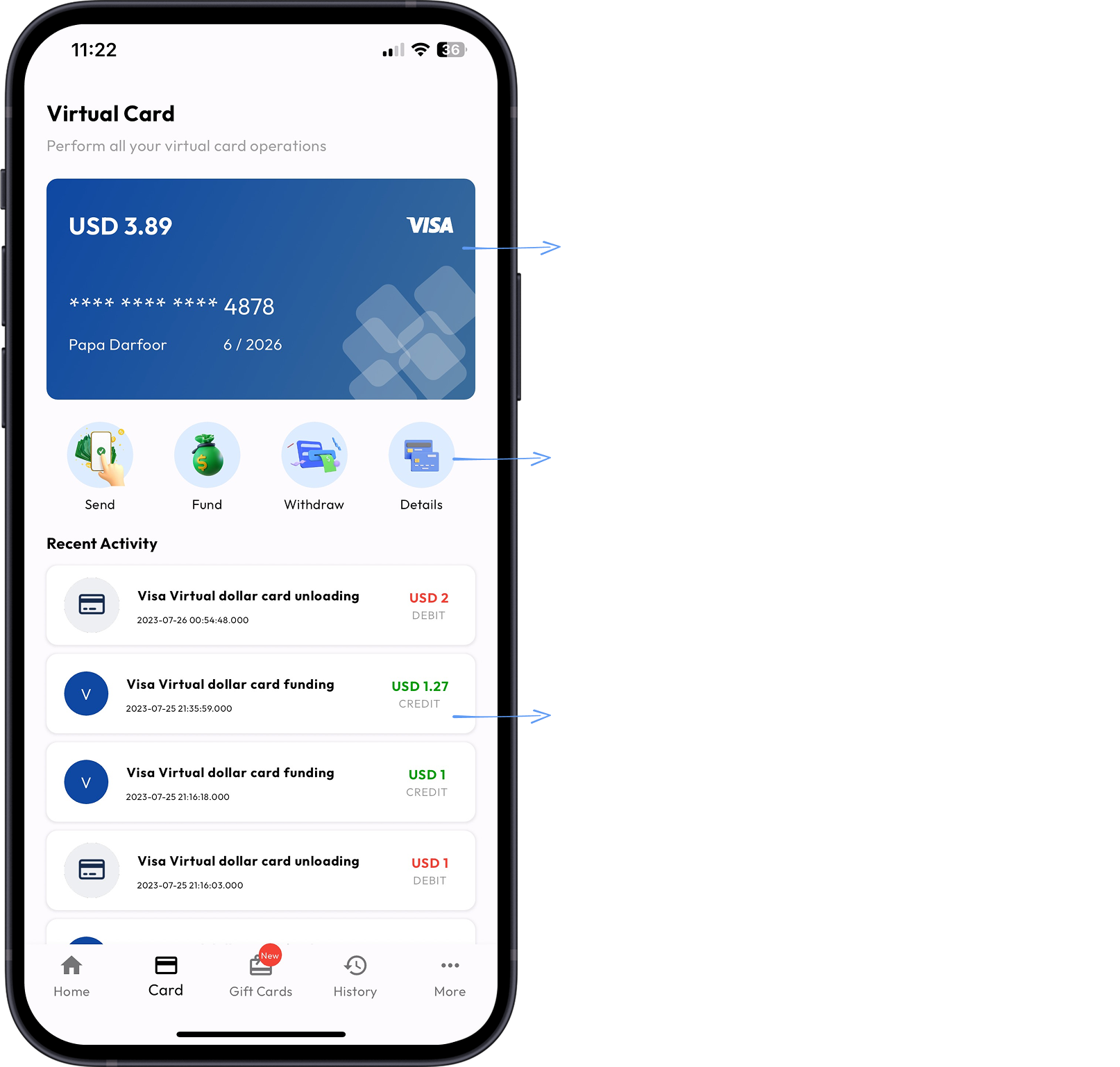
Brand Experience
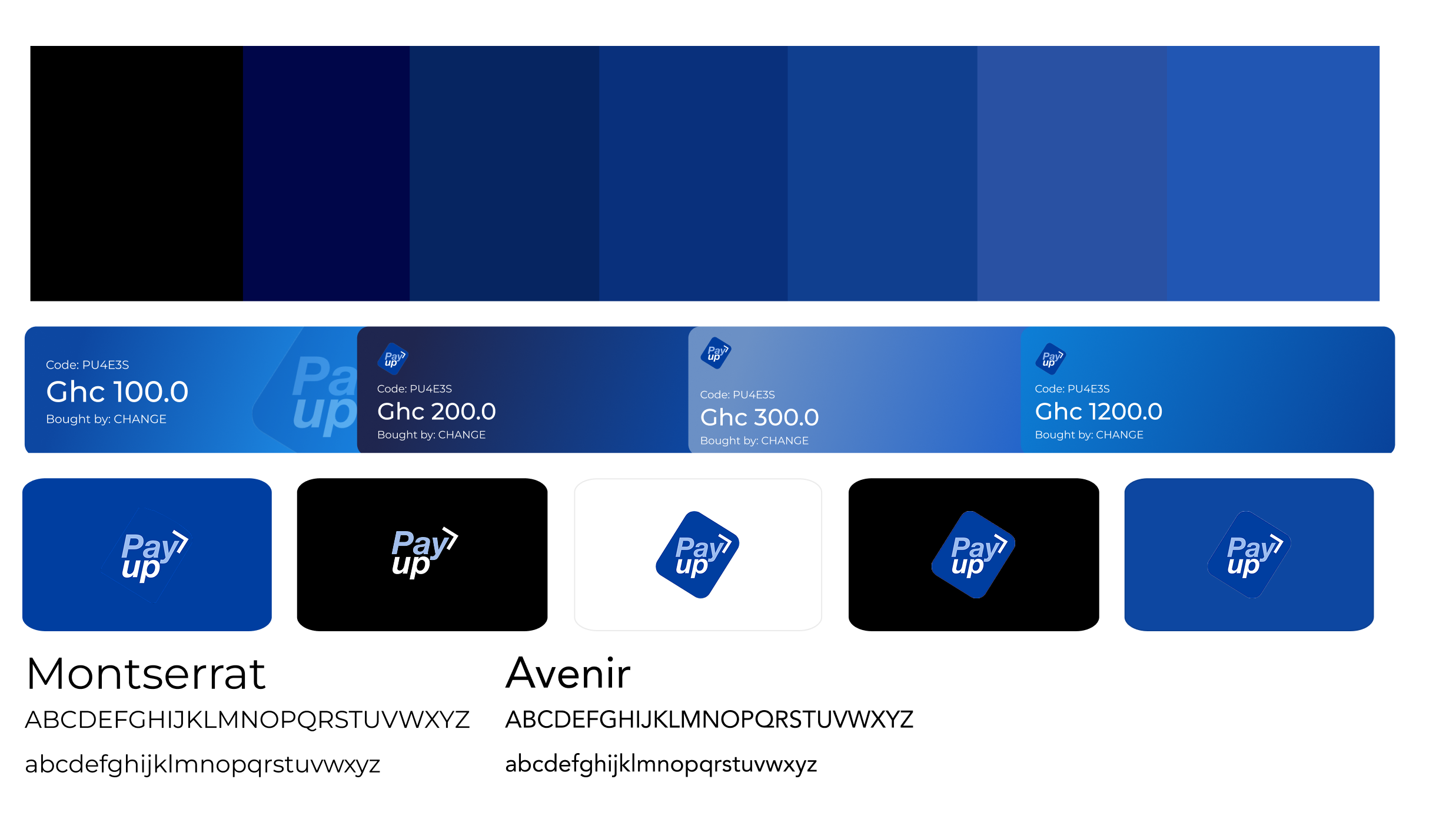
Visual Identity System
Maintained a clean and confident visual identity built around clarity, accessibility, and trust.
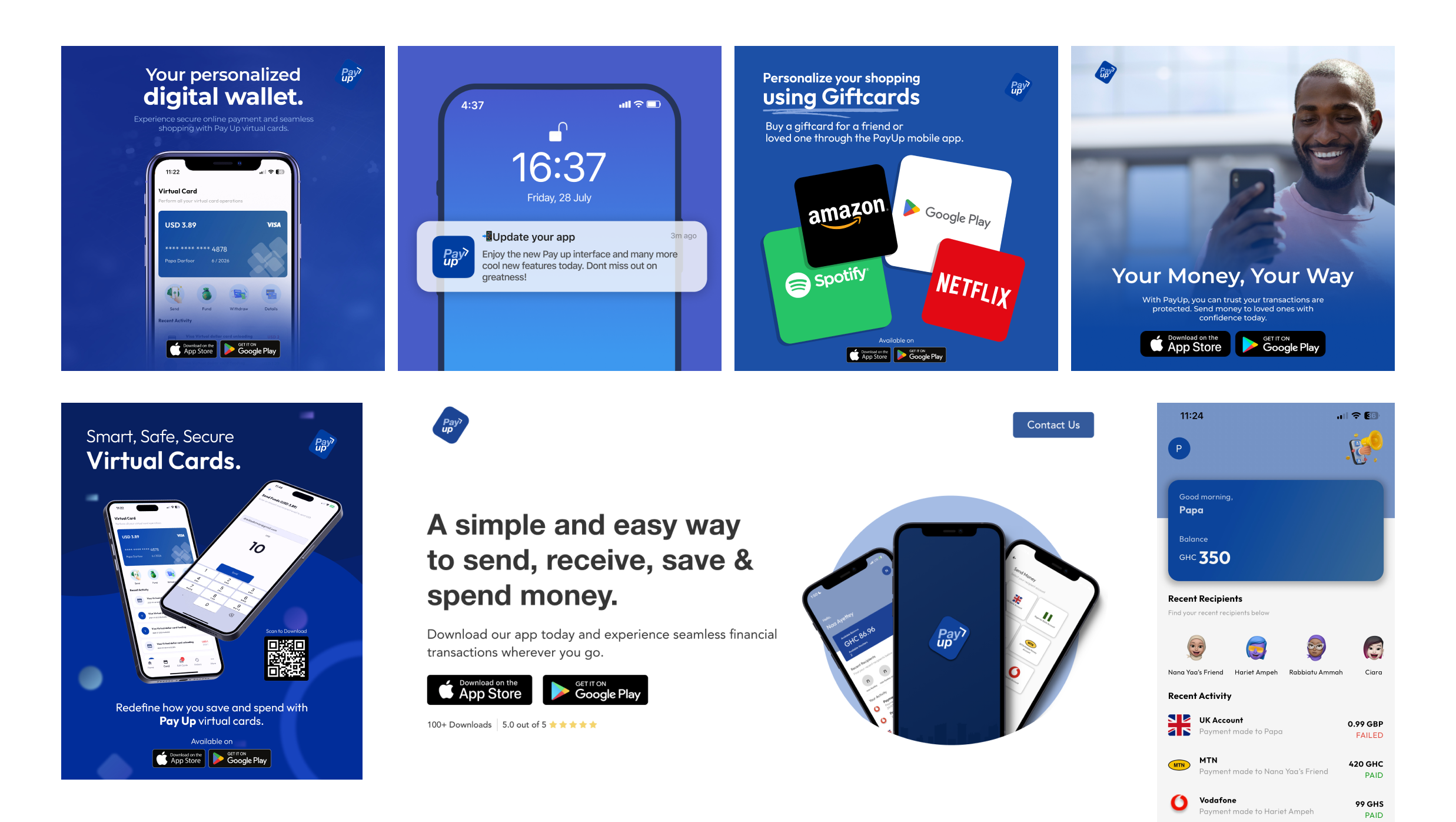
Product + Social Consistency
Maintained a unified tone and visual language across app and social channels, ensuring a consistent experience from product to brand storytelling.
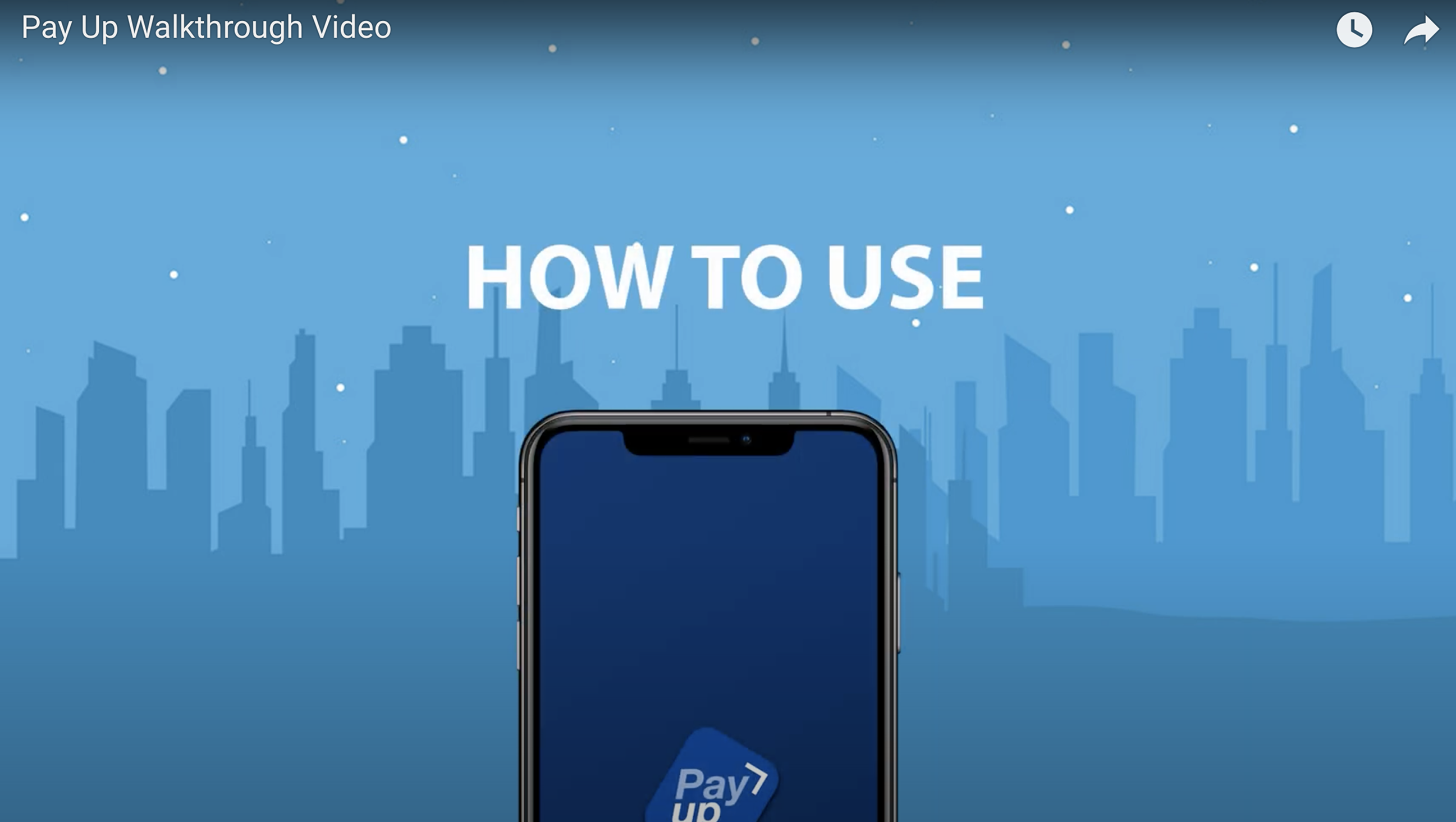
User Education
Used social media tutorials and Q&As to demystify digital payments, improving comprehension and engagement.
Reflection
Pay Up taught me to design for trust and make data-informed decisions in a fast-paced environment. It strengthened my understanding of user-centred design in fintech and sharpened my leadership skills
What i would do differently
The fast-paced nature of the company made it challenging to document processes and iterations consistently. Since then, I’ve made documentation a core part of my workflow, recording key decisions and outcomes to ensure better alignment and shared knowledge across teams.
View more projects